
“The true value of the martial arts is not in 100 victories but in the perfection of the character of the students.” –– Funakoshi Gichin
Content
Note: Readers are welcome use information from this webpage provided that they are referenced/cited back to this webpage and credieted as a source material.
Because Okinawa, where Karate originated, is now part of modern-day Japan, Karate inherits the Japanese language, terminologies, customs and traditions. The embodiment of the physical Karate training does not go without the embodiment of the Karate etiquette.
The rei (礼; bow) is the main form of greeting in Japan just as shaking hands is in the west. Similarly, in Karate, karateka (手家; karate practitioner(s)) will bow to one another as a form of greeting upon meeting or departing, and more importantly as a sign of respect.

More specifically, a standing bow is called ritsurei (立礼), however this term is only used to distinguish from the seated bow, otherwise it will just be called rei.[1][2][3][4][5] In Karate, we refer to bowing in general simply as rei (礼). However, the general term for bowing is ojigi (お辞儀).[6] Rei (礼) can also be referred to “etiquette”, and often translated as “respect”. The old character for rei (礼) is written as “禮”, which indicates abundance. In other words, etiquette is expressing respect and gratitude for the people and environment around you through a set manner.[3]
There is a rule of thumb for the timing of a bow known as reisansoku (礼三息; bow (in) three breaths). Synchronise lowering the body with the first inhalation, stay still in that position while exhaling, and then rise up during the second inhalation.[4]
Customarily, the kohai (後輩; junior(s)) will rei first and lower and longer than their senpai (先輩; senior(s)), and even lower and longer to someone of higher seniority, for example their sensei (先生; teacher(s)).[2][6] The sensei will normally give the instruction “kiwotsuke” (気を付け; attention) for all to ‘stand to attention’, followed by “rei” where everybody bows, then by “yoi” (用意; ready) or “kamaete” (構えて; posture) for all to stand in ‘ready position’.
It is customary for the deishi (弟子; student(s)) to rei;
- upon meeting anyone who is more senior to you when entering the dōjō,
- when one wishes to interrupts a sempai or the sensei,
- when one needs to dismiss oneself from the training even if it is to a position within the boundaries of the dōjō,
- upon returning to the training after dismissing one self,
- upon being called up to the front of the class by the sensei, perhaps for a minor demonstration, then rei again to the sensei when one at the front of the class,
- upon returning to one’s position amongst the other students after being called up, and;
- upon entering and leaving the dōjō.
- It is also customary for all the deishi to rei to each other, especially their sempai upon the conclusion of the class before adjourning.
“Ossu/Osu” (押っ忍・押忍) is said aloud as an expression of agreement with enthusiasm. The origin of the term is uncertain, yet it is widely used and understood internationally amongst many but not all Japanese martial arts including Karate. Within Karate, “ossu” is used heavily in Shōtōkan and it descendent ryūha (流派; mainstream school (of thought)) like Kyokushin, but is not a tradition of Shitō-ryū, and most if not all Okinawan ryūha, and majority other Japanese Karate ryūha. For the majority of Karate, the common usage of “hai” (はい; yes) is used as a positive response or agreement. Though “hai” literally translates to “yes”, it more often expresses acknowledgment and not necessarily agreement.
For arts where “ossu” is used, it is customary for students say “ossu”, whether as a group or individually, upon rei, and as a response to the sensei’s instructions and advice. However, it is not appropriate to be used publicly in Japan, especially to a person of higher status. It is normally only used informally amongst male friends as a form of greeting.
“Ki” is the Japanese reading of the Chinese word, “Qi” (氣; pronounced as ‘chee’) translated as energy, spirit or life force. It is a powerful concept present in many oriental martial arts. Combining with “Ai” (合い), meaning union, “Kiai” is often translates to ‘scream’, ‘yell’ and ‘fighting spirit’, or literally ‘union of energy’.[7] This describes the action of ‘yelling’ during performing techniques in Karate as well as many other Japanese martial arts.
 |
| Japanese Kanji for 'Kiai'. |
Effects of the kiai:
- Increases enthusiasm, especially in groups, that keeps the mind active and focused even when exhausted, hence increases training productivity.
- Builds habit to scream when attacked, possibly alerting others, hence scaring off the assailant.
- Corrects breathing patterns during rigorous physical that is to exhale upon executing a technique for efficient circulation of oxygen.
- Corrects the breathing method from ‘chest breathing’ (expansion and compression of the chest) to ‘diaphragmatic breathing’ (contraction and relaxation of the strong curved sheet of muscle that divides the chest from the abdomen, called the diaphragm; also called ‘abdominal breathing’ and ‘belly breathing’). As the diaphragm contracts, it pulls the bottom of the lungs down, creating more space for air intake and to reach to the base of the lungs in ways chest breathing cannot achieve. Perfusion (blood flow) is greater at the base due to gravity. Ventilation (airflow in and out of the alveoli—tiny air sacs where oxygen enters the blood and carbon dioxide leaves) is also greater there because the alveoli are less expanded at rest as a result of greater pressure from increased weight of fluids surrounding the lungs within the chest wall, hence can expand more for greater air intake.[8] This improves core stability, slows breathing rate, lowers heart rate and reduces oxygen demand.[9][10][11] This breathing method is also practiced in yoga, singing and drama, and every other martial arts.
- Correct kiai and diaphragmatic breathing prepares one to take impact to the abdomen.
 |
| Source: Wiki Commons |
The concept of kiai is also present as an ‘attitude’ in the traditional East Asian equivalent to chess, known internationally by its Japanese name, Go (kanji: 碁, hiragana: ご).[12][13] In Kendō, the concept of kiai is a separate though related concept to the vocalisation of kiai. In Kendō, the vocalisation of kiai is referred to as kakegoe (掛け声), and the two are often confused even among kendōka (Kendō practitioner). Upon matured and cultivated skill, a kendōka would be able to kiai without kakegoe, i.e. a silent kiai.[7][14][15]
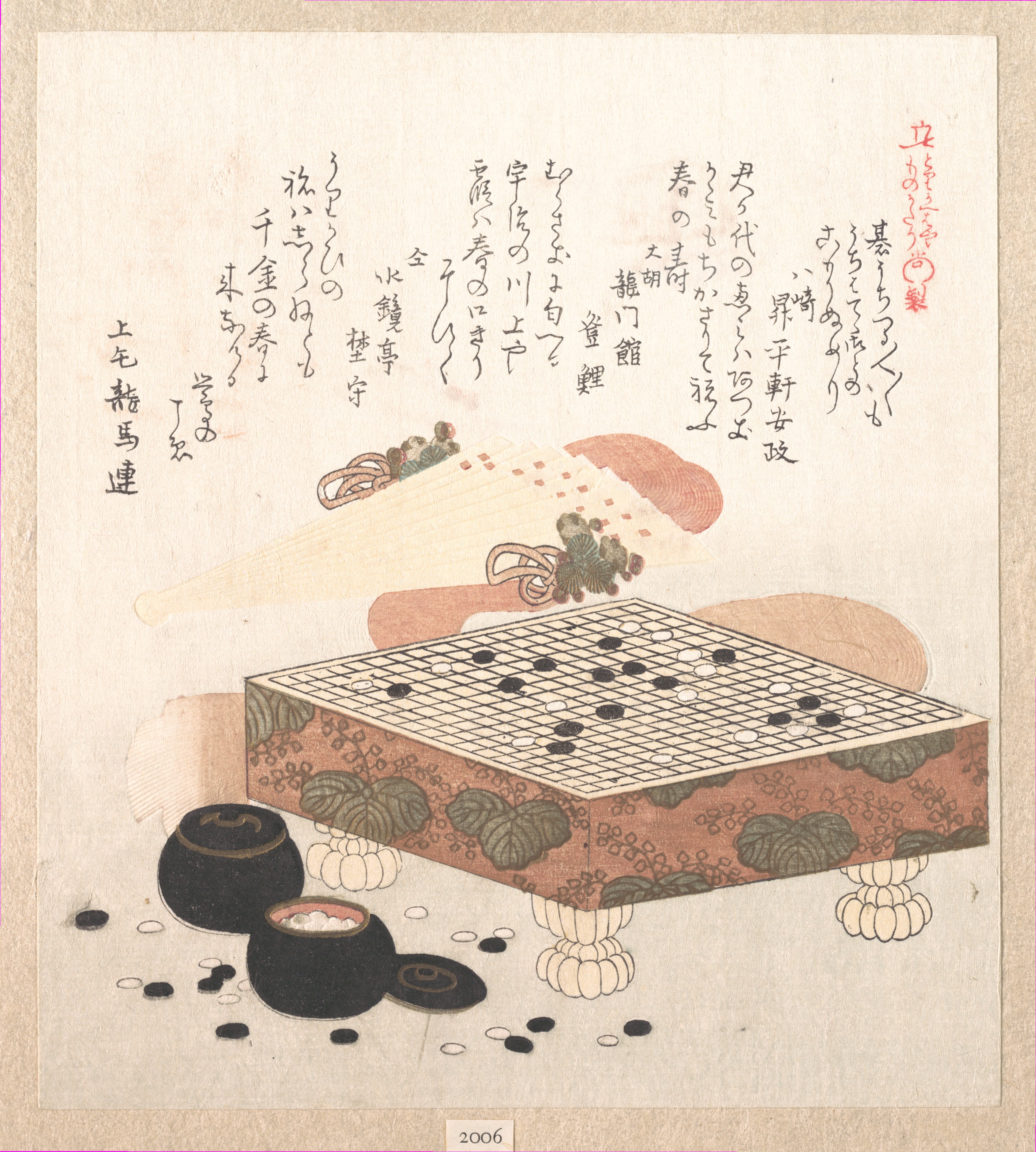 |
| 19th century painting during the Edo period (1615–1868) by Japanese artist, Kubo Shunman (1757–1820), titled "Outfit for the Go Game" depicting the boardgame known as ‘Igo’ (kanji: 囲碁or 碁, hiragana: いご) or ‘Go’ (kanji: 碁, hiragana: ご) in Japanese, ‘Wéiqí’ in Chinese (traditional: 圍棋, simplified: 围棋), and ‘Baduk/Pa̠duk̚’ in Korean (Hangul: 바둑). (source: www.metmuseum.org) |
Kakegoe also refers to the shouting or vocals performed by players of the percussion in traditional Japanese instruments like the kotsuzumi, ōtsuzumi and taiko.[16,17][18] In Kabuki, a classical form of Japanese theatre, Kakegoe is the informal art of shouting by fans which are valuable addition to the performance.[7][14][19]
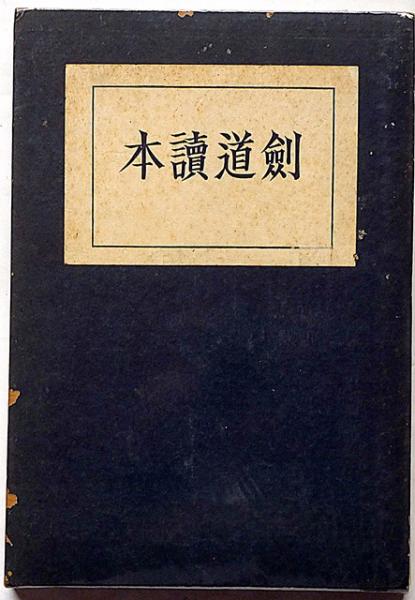 |
| Front cover of the original publication of Kendō Yomihon/Tokuhon/Dokuhon (剣道讀本/剣道読本; Kendō guidebook/textbook/manual) by Noma Hisashi (野間 恒).[23] |
In the 1939 book by Kendōka, Noma Hisashi (野間 恒), Kendō Yomihon/Tokuhon/Dokuhon (剣道讀本/剣道読本; Kendō guidebook/textbook/manual), often translated to English as ‘The Kendō Reader’,[20][21][22][23][24] kakegoe in Kendō (equivalent to kiai in Karate) results in the following:[15][25]
- It stimulates the spirit;
- It focuses one's resources upon a single point, thereby producing greater than normal power;
- It makes the enemy aware of one's power and spirit;
- It forestalls the enemy's intentions;
- It confuses the enemy;
- It lures the enemy in;
- It irritates the enemy;
- It startles the enemy;
- It declares one's victory.
“There is a Buddhist saying that ‘any place can be a dōjō,’ and that is saying that anyone who wants to follow the way of Karate must never forget.” –– Funakoshi Gichin
‘Dōjō’ (道場) literally translates to ‘the place of the Way’, and refers to the hall where the training is conducted. The ‘Way’, ‘dō’ (道), in this context is a shorthand for Budō (武道; military arts) referring to modern Japanese martial arts formalised during or after the Meiji period (明治時代; 1868 – 1912).[26][27]

|

|

|
| The original Ogasawara family crest, the Sangaibishi (三階菱; three rhombus). One of three active family branches, one which caries the on Yabusame tradition, uses this crest exactly as it is (source: www.ogasawara-yabusame.com). Antother active family branch, which carries the Reihō, also uses this original family crest, but in purple (source: [31]). | A modified crest used by the one three active family branch, that caries multiple traditions (source: [28,29]). | |
Most of the etiquettes found in most Japanese martial arts including Karate were adopted from Ogaswara-ryū (小笠原流), a traditional Japanese system of martial arts and etiquettes developed by Ogasawara Nagaiko (1162 – 1242) during the Kamakura period (鎌倉時代; 1185 – 1333). It was formalised and handed down within the clan he founded, the Ogasawara clan.[2][28,29]
Ogasawra-ryū specialised in bajutsu (馬術; horsemanship), kyūjutsu (弓術; archery) and yabusame (流鏑馬; horseback archery), but these martial teachings were mostly lost by the end of the Muramochi period (室町時代; 1366 – 1573) a.k.a. Ashikaga era (足利幕時代). Their teachings on etiquette, however, gained influence when it was officially sanctioned by the court of Ashikaga Takauji (1305 – 1358), first shōgun and founder of Ashikaga or Muromachi shogunate. The first manual of courtly etiquette, Sangi Ittō (三議一統) translated as ‘Three Deliberations Unified’, was published in 1380.[2][3][29,30][31][32]

|
| Sangi Ittō (三議一統) translated as ‘Three Deliberations Unified’, the first manual of court etiquette by the Ogasawara samurai family clan published in 1380. (source: 国書データベース) |
In Budō tradition, the kamiza (上座) literally translates to “upper seat” and is assumed as the ‘north’ or front of the dōjō. It is where the sensei would position himself/herself in formal line-ups. Ideally, the kamiza would be the wall or area of the room furthest away from the genkan (玄関), the entrance. The opposite end, or the ‘south’ of the dōjō, would be called the shimoza (下座), literally translates to “lower seat”.[26][33][34]
Joseki (上席) and shimoseki (下席) are the senior and junior sides of the dōjō respectively. They literally translate to “upper position” and “lower position”. During formal line-ups, the students would be arranged with the lowest ranking students at the shimoseki, and increasing in ranks towards the joseki, where the highest ranking students will be positioned.[26][33][34]

Ideally, the joseki (senior position) would be on the ‘east’ side of the dōjō, and the shimoseki (junior position) on the ‘west’. However, this is not strictly the case. In fact, the position of the joseki and shimoseki is fully dependent on where the kamiza (‘north’ of the dōjō) is chosen to be in relative to the genkan (entrance). If the kamiza chosen is as such that the genkan is on the ‘east’ side of the dōjō, be it on the south wall or east wall itself, the joseki would be on the west, and shimoseki on the east, and vice versa.[26][33][34]
The seating protocol of kamiza and shimoza with respect to the entrance/exit is called sekiji (席次; order of seating) and dates back to the Feudal period (1192-1603). The Shōgun (将軍), Samurai warlord and head of a military monarchical government known as bakufu (幕府) or shogunate in English, would be seated at the kamiza furthers away from the entrance hence most protected from possible attacks from outside.[35]
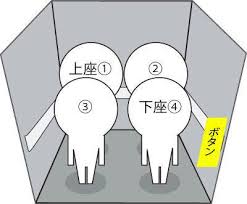
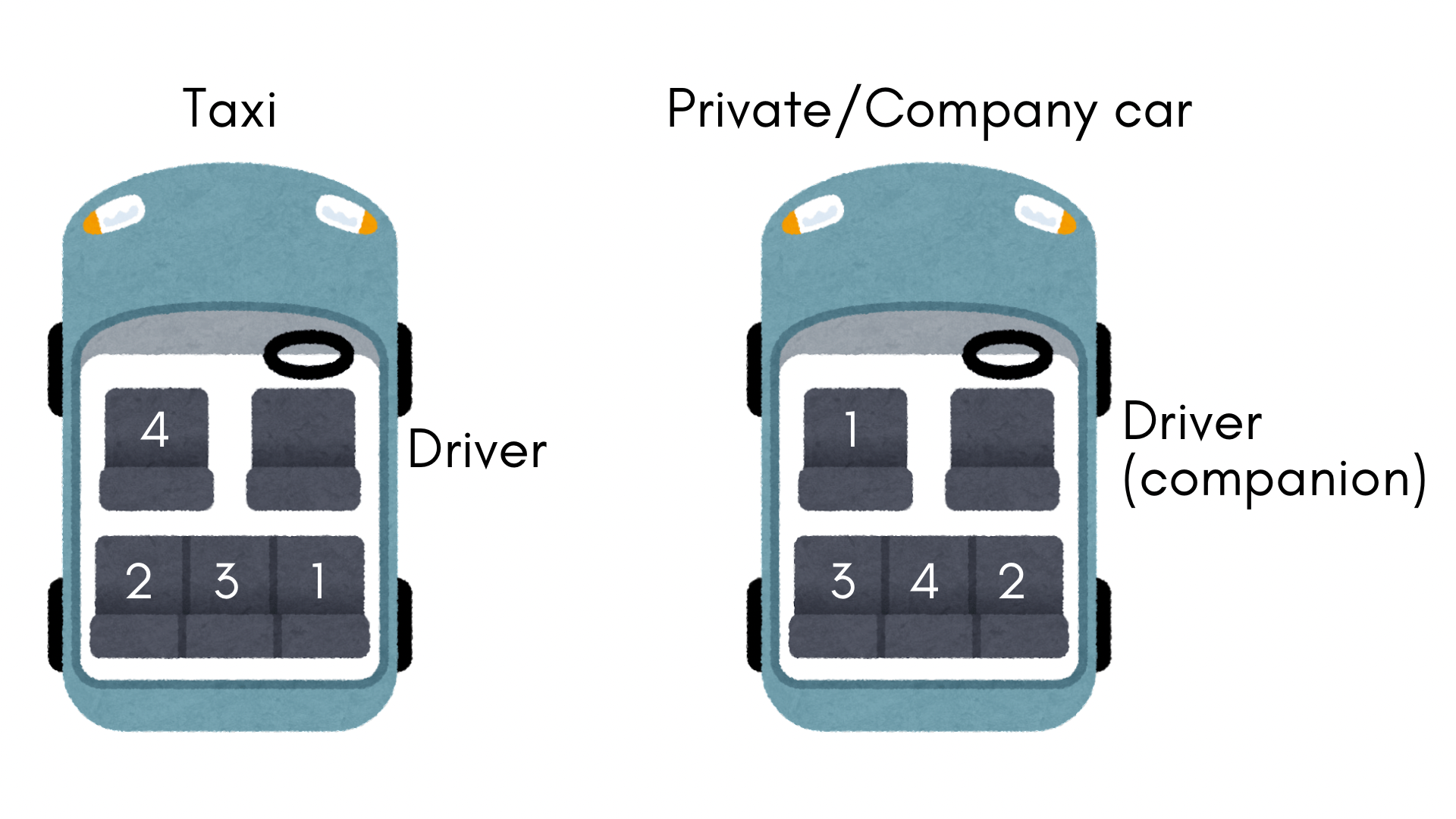
In modern day, seikiji is not only present in dōjō or even in Budō, but also in formal conventional-style Japanese companies. Sekiji applies to both Japanese-style as well as Western-style offices, receptions or meeting rooms, company dinner, vehicles, for where taxis and company cars have different arrangement, other public transportation, as well as lifts.[36][37][35][38]
 |
 |
 |
|
| Diagrams showing sekiji (席次; order of seating) as part of business etiquette in the modernal world in various scenarios such as office reception rooms (left image; © Pixta, source:[36]), the lift or elevator (top-right image; source: [37]) and car seats whether in taxis and hired cars or in company or private cars (bottom-right image; source: [35]) | |
The rule of the left taking precedence (from north facing south) dates back to the Heian period (平安時代; 794 – 1185) derived in the imperial courts from the political ideology that the emperor was the lodestar facing south over the populace he protects. From the emperor’s view, the morning sun rose from the east, the emperor’s left, hence considered the more prestigious side.[38]
“The true value of the martial arts is not in 100 victories but in the perfection of the character of the students.” –– Funakoshi Gichin
It is customary for a karateka to rei to the dōjō before stepping into the premise, then immediately rei to the sensei if the sensei is present. When stepping out of the dōjō, rei first to the sensei after being granted permission to be dismissed, then rei to the dōjō once more before stepping. In both scenarios, the rei to the dōjō is performed regardless of whether the dōjō is empty or occupied.
In Japan, footwear are to be arranged neatly facing away from the genkan (entrance), described with the phrase “kutsu no tsumasaki wa tomuki (靴のつま先は外向き; toes of shoes point outward)”.[39]
There is a specific protocol on how to remove your footwear at the genkan, but this is applicable where the genkan is designed traditionally according Japanese architecture where there is a step that marks the boundary between indoors and outdoors.[40]
 |
| Source: www.samuraijapan-bc.com |
Apart from tidiness, mindfulness and hospitality, this tradition is also rooted in practicality dating back to the Samurai culture of the feudal period to the modern-day frequent dangers of earthquakes. For the samurai, it was important for them to be able to quickly step back into their footwear with ease for quick response in the case of unexpected enemy attack. In modern times, this would be useful to exit buildings quickly when earthquake or other natural disaster strikes.[39][41]
When the sensei enters the dōjō after his deishi (student), the most senior deishi should immediately command everyone to kiwotsuke (気を付け; attention) to face the sensei and instructs a rei. If the deishi in charge fails to perform this, then each deishi shall take initiative to individually rei to the entering sensei. This custom also applies if a karateka more senior to the sensei enters the dōjō, where the sensei himself would provide the command.
When a deishi arrives late and wishes to take part in the training already being conducted, after carrying out necessary preparations to take part in the training (e.g. wearing the karategi, warming up etc.), the deishi should first bow to the sensei, then while still outside the training area, sit on seiza (正座; proper sitting) facing the class, then zarei (座礼; seated bow) whilst saying aloud[1][3][4][5]:
悪例況して済みません
transliteration: “akurei mashite sumimasen”
translation: “I am sorry, not to mention my bad example”
After the bow, the deishi shall wait for the sensei’s permission to take part in the training.


“礼に始まり礼に終わる Rei ni hajimari rei ni owaru / Start with the ‘rei’, end with the ‘rei’.”
There is a formal custom part of dōjō etiquette found in all of Budō that involves a series of bows that is carried out before commencing as well as before adjourning training. In English, it is often referred to as ‘opening ceremony’ or ‘closing ceremony’ respectively, or ‘bowing ceremony’ for both. English sources often uses Reihō (礼法) and sometimes Reigi (礼儀) to refer to general etiquette[42][43], and Reishiki (礼式) to refer to the bowing ceremony for the reason that “式 (shiki)” in “礼式 (reishiki)” can be translated as “ceremony”, hence “bowing ceremony”.[44][45][46][47][48][49] However, “式 (gi)” in “礼儀 (reigi)” can also be translated as “ceremony”. In rare instances, Gyōgi (行儀), translated as ‘manners’, can also be found in related topics.[1]

Japanese sources, however, doesn’t seem to provide a name for the bowing ceremony, but categorises it under the title Reihō (礼法) or Reigi (礼儀). Though very rare, Reishiki (礼式) and Gyōgi (行儀) can appear in these sources. These four terms are often used interchangeably to refer to general etiquette, manners, courtesy or behaviour, and not the bowing ceremony specifically. i[3][32][50][51][52][53][54] However, there are nuance differences between these terms. Reihō (礼法) is a deeper concept that emphasises not only the physical “form”, i.e. how to bow correctly, but also the underlying “spirit” and “heart.” Reigi (礼儀) place emphasis on the aspects of “modes of behaviour” and “rules” or “code of conduct” that are established to avoid causing discomfort to others.[44][45][55]
The term “礼 (rei)” translate not to only ‘bow’, but also to ‘respect’ or ‘courtesy’. Apart from “ceremony”, “式 (gi)” in “礼儀 (reigi)” can also mean “rule”, hence “rule of bowing/courtesy”, hence “code of conduct”. “法 (hō)” in “礼法 (reihō)”, as well as in “拳法 (Kenpō)” is generally understood as “law” or “method”, hence “law/method of bowing/courtesy”. Kenpō (拳法), translates to “fist law/method”, is a term used in Okinawa and Japan to refer to Chinese martial arts.[44][45]
It is expected that prior to training, each karateka in the dōjō came from different backgrounds, different previous activities, and with different mental and emotional state. As symbolism as well as practical preparation, the bowing ceremony upon commencing class is performed to forget all past activities, ignore differences between peers, and focus all of one’s mind and emotions to that brief period of training. Upon adjourning the class, the bowing ceremony is an opportunity to reflect on what practiced was taught during the class and to return one’s mind and emotions to the state prior the training.
Bowing ceremony may vary from ryūha (流派; mainstream school (of thought)) to ryūha as well as from dōjō to dōjō. Some perform in every class, whereas some perform only on special occasions like grading and seminars. For most of M.A.S.K. and Shitō-ryū, it is performed in every class for both commencing and adjourning class. Shown below is the general Bowing ceremony carried out in Shitō-ryū:
- Line Up or Line Up by Rank (narande並らんで)
- Stand to Attention (kiwotsuke気を付け)
- Sit formally (seiza正座)
- Meditate - close eyes (mokusō黙想)
- Open Eyes, i.e. end meditation (kaimoku開黙)
- Bow to the Front (shōmen ni rei正面に礼) - normally only performed on special occasions
- Bow to the Sensei (sensei ni rei先生に礼)
- Bow to Each Other (otagai ni rei御互いに礼)
- Stand Up (tate立て or kiritsu起立)
- Bow (rei礼) - to commence/adjourn the class
.jpg "Bowing Ceremony")
iPrevious edition of this page states that written form of the bowing ceremony was “例式”, translates as “regular ceremony” and also pronounced as Reishiki, where “礼式”, also pronounced Reishiki only refers to general etiquette. After further research, I found that there is no evidence of the use of “例式” to refer to the bowing ceremony in martial arts, but instead used to refer to official document templates in business context.
Keikogi (稽古着) translates to “training wear”, whereas dōgi (道着) translates to “(the) ‘Way’ wear”. Similar to the word ‘dōjō’, ‘Way’ or ‘dō’ is a shorthand for Budō (武道), i.e. modern Japanese martial arts. Keikogi and dōgi are general term for Japanese martial art uniform. Karategi (空手着) which means “Karate wear” refers to the Karate uniform specifically. Many English speakers tend to simply say ‘gi’. This is grammatically wrong, as on its own, the kanji ‘着’ is pronounced ‘ki’, and is a verb meaning “to wear”. It is only pronounced as ‘–gi’ when it is used as a prefix. This kanji is also the first kanji in the word ‘kimono’ (着物), the traditional Japanese garment and the national dress of Japan, and literally translates to “thing to wear”.
The keikogi consists of the (i) uwagi (上着; upper wear) which is the top or jacket portion of the full set, the (ii) zubon (ズボン; borrowed from French word: jupon) which is the trousers portion of the uniform, and the (iii) obi (帯) or “belt”.[56][57]
.png "Wearing the Keikogi稽古着 / Dōgi道着 / Karategi空手着 & tying the Obi帯")
.png "Folding the Keikogi稽古着 / Dōgi道着 / Karategi空手着 , i.e. training wear/ (the) ‘Way’ wear / karate wear.")
The keikogi, the obi as well as the ranking system present in Karate and most Japanese martial arts were introduced by the founder of Judō, Kanō Jigorō (嘉納 治五郎; 1860 – 1938), in the 1800s.[56] All these were first adopted into Karate-dō in 1924.[58][59] Kanō Jigorō invented the keikogi himself,[56] whereas he adapted ranking system from the East Asian two-player strategy board game generally known as Go. The board game is known as ‘Igo’ (kanji: 囲碁or 碁, hiragana: いご) or ‘Go’ (kanji: 碁, hiragana: ご) in Japanese, ‘Wéiqí’ in Chinese (traditional: 圍棋, simplified: 围棋), and ‘Baduk/Pa̠duk̚’ in Korean (Hangul: 바둑).[13][60][61]
 |
| Jigoro Kano (kanji: 嘉納 治五郎, Japanese: Kanō Jigorō; 10 December 1860 – 4 May 1938), founder of Judo (kanji: 柔道, Japanese: jūdō; literal: gentle way) |
Though there are older text on Go/Wéiqí, the oldest that describe rankings dates back to the 10th or 11th century during the Northern Song Dynasty (960 – 1279) in an ancient manual for the game titled Qíjīng Shísānpiān (棋经十三篇; The Classic of (Wéi)Qí in Thirteen Chapters). These ranking sysem is now described as Jiǔ Pǐn Zhì (九品制; Nine-rank system).[62][63][64] The system was loosely based on the Jiǔ Pǐn Zhōngzhèng Zhì (九品中正制; Nine-grade controller system) used at the imperial court to rank the importance of officials.[65] Teaching and rankings of Go was formalised in the 17th century by the Japanese.[66][56]
The modern ranking system is referred to as the Kyū (級, rank) and Dan (段, degree) system, or simply Dani (段位, grade) in both the board game and Japanese martial arts.[1][58][59][67][68][56]

|
| Part of a painting by Qiu Ying (仇英; 1494–1552) titled ‘Spring Dawn in the Han Palace’ (明仇英漢宮春曉; Míng chóu yīnghàn gōng chūnxiǎo huìhuà) depicting women plyaing Wéiqí (traditional: 圍棋, simplified: 围棋) in the Ming palace. (source: The National Palace Museum Collection) |
Though most if not all Budō uses the Dani (段位, grade) system, not all use obi (帯; belts) or colours to represent the ranks, for example Kendō and Iaidō. When coloured obi were first introduced in Judō, it started with only white and black.[58][59][56] It is said that white resembles purity, and black to represent experience. Eventually brown was introduced. There are some Karate organisations today that still use only these three colours. When the other colours were introduced, brown became the staple colour amongst most Karate organisations to signify ranks before black. Colours after white generally progresses from lighter to darker, and to brown and black. Eventually it is assumed that darker colours to represent greater experience.
Different ryūha tend to use different sequence of colours to represent the kyū, but generally most start with Rank 9 as white, followed by Rank 8, up to Rank 1, where the smaller the kyū number, the higher the Rank. This is followed by 1st Degree black belt, 2nd Degree and onwards, where the higher the Dan number, the higher the Degree. The coloured ranking system shown below is as practiced in M.A.S.K. (Malaysian Association of Shito-ryu Karate-do):[1]
| KYŪ/DAN (English) | KYŪ/DAN (Japanese) | COLOUR |
|---|---|---|
| 9th kyū (rank 9) | kukyū (九級) | white |
| 8th kyū (rank 8) | haopkyū (八級) | yellow |
| 7th kyū (rank 7) | nanakyū (七級) | green |
| 6th kyū (rank 6) | rokukyū (六級) | blue |
| 5th kyū (rank 5) | gokyū (五級) | purple |
| 4th kyū (rank 4) / Brown 4 | yonkyū (四級) | brown |
| 3rd kyū (rank 3) / Brown 3 | sankyū (三級) | brown |
| 2nd kyū (rank 2) / Brown 2 | nikyū (二級) | brown |
| 1st kyū (rank 1) / Brown 1 | ikkyū (一級) | brown |
| 1st Dan (1st degree) | Shodan (初段) | black |
| 2nd Dan (2nd degree) | Nidan (弐段) | black |
| 3rd Dan (3rd degree) | Sandan (参段) | black |
| 4rd Dan (4th degree) | Yondan (四段) | black |
| 5rd Dan (5th degree) | Godan (五段) | black |
| Note: The Dan title and colour continues up to as many Dan the ryūha implements. Some schools apply white stripes at one end of the brown belt to represent their kyū, i.e. 4 white stripes to represent 4th kyū, 3 stripes to represent 3rd kyū and so on. Another practice is applying gold stripes at one end of the black belt to represent their Dan, i.e., 1 gold stripe to represent 1st Dan, 2 gold stripes to represent 2nd Dan, and so on. |
||
Note: This reference section combines all references from 礼法/礼儀/礼式/行儀 Etiquette, Terminologies and 原則 Gensoku (Principles)
[1] Persatuan Shito-ryu Karate-do Malaysia / Malaysian Association of Shito-ryu Karate-do (M.A.S.K.) Complete Instructor Manual, Version 3 ed., Kuala Lumpur: (M.A.S.K.), Persatuan Shito-ryu Karate-do Malaysia / Malaysian Association of Shito-ryu Karate-do, October 2010.[2] D. Lowry, In the Dojo: A Guide to the Rituals and Etiquette of the Japanese Martial Arts, 1 ed., Boston, Massachusets: Waterhill, 2006, pp. 116-133.
[3] 剣道授業の展開、新中学校学習指導要領に準拠した 安全で効果的な, ダイジェスト版第4版 ed., Tokyo, Japan: 公益財団法人・全日本剣道連盟, 2020.
[4] “The Secrets of the Ojigi, The Act of Expressing with the Bowing,” RoYuMi, 10 August 2021. [Online]. Available: https://royumi.com/the-secrets-of-the-ojigi-the-act-of-expressing-with-the-bowing. [Accessed 10 July 2025].
[5] 白. 義照, “剣道指導カリキュラム (幼・少年用),” 丸亀武道館一心会, 24 July 2025. [Online]. Available: http://marubu.web.fc2.com/img/pdf/kendousidou-manual25.7.24.pdf. [Accessed 31 July 2025].
[6] A. L. Yani, “Three Types of Bowing in Japanese Culture,” 30 Marh 2022. [Online]. Available: https://www.tokhimo.com/post/different-type-of-bows-in-japan-1. [Accessed 10 July 2025].
[7] “The Spirit Shout Kiai in Martial Arts,” Combatpit.com, [Online]. Available: https://www.combatpit.com/blog/kiai-martial-arts. [Accessed 15 July 2025].
[8] K. A. Powers and A. S. Dhamoon, “Physiology, Pulmonary Ventilation and Perfusion,” StatPearls Publishing LLC, 23 July 2023. [Online]. Available: https://www.ncbi.nlm.nih.gov/books/NBK539907/. [Accessed 7 October 2025].
[9] A. F. DiMarco, A. F. Connors Jr. and K. E. Kowalski, “Gas exchange during separate diaphragm and intercostal muscle breathing,” Journal of Applied Physiology, vol. 96, no. 6, pp. 2120-2124, 1 June 2024.
[10] “Diaphragmatic Breathing,” Cleveland Clinic, 30 March 2022. [Online]. Available: https://my.clevelandclinic.org/health/articles/9445-diaphragmatic-breathing. [Accessed August 2022].
[11] “Diaphragmatic Breathing,” Johns Hopkins All Children's Hospital, [Online]. Available: https://www.hopkinsmedicine.org/all-childrens-hospital/services/anesthesiology/pain-management/complimentary-pain-therapies/diaphragmatic-breathing. [Accessed August 2022].
[12] “Kiai,” Sensei's Library, 27 April 2018. [Online]. Available: https://senseis.xmp.net/?Kiai. [Accessed 9 July 2025].
[13] “Go,” Sensei's Library, 18 July 2023. [Online]. Available: https://senseis.xmp.net/?Go. [Accessed 9 July 2025].
[14] E. Nalbant, “Why Kiai?,” The Way of the Sword; Kendo history and philosophy, 28 March 2020. [Online]. Available: https://kendoandphilosophy.wordpress.com/2020/03/28/kiai/. [Accessed 16 July 2025].
[15] 恒. (. Hisashi (野間 ), The Kendo Readher (translation of original: 剣道讀本/剣道読本; Kendo Yomihon/Tokuhon/Dokuhon ), Noma Hisashi (野間 恒).
[16] “Kakegoe (掛声/カケ声),” the能ドットコム | the能.com | the-Noh.com, 6 September 2012. [Online]. Available: https://db2.the-noh.com/edic/2012/09/kakegoe.html. [Accessed 16 July 2025].
[17] “掛声,” https://db2.the-noh.com/edic/2012/09/kakegoe.html, 6 September 2012. [Online]. Available: https://db2.the-noh.com/jdic/2012/09/post_331.html. [Accessed 16 July 2025].
[18] ushiwakamaru, “Kakegoe 掛け声 (emphatic shouting) in Taiko performances,” Wadaiko Toshokan 和太鼓図書館, 26 March 2014. [Online]. Available: http://wadaikotoshokan.com/2014/03/26/kakegoe-%E6%8E%9B%E3%81%91%E5%A3%B0-emphatic-shouting-in-taiko-performances/. [Accessed 16 July 2025].
[19] “Kakegoe: The Sounds from the Great Beyond,” News On Japan, 17 Nov 2022. [Online]. Available: https://newsonjapan.com/article/136101.php. [Accessed 16 July 2025].
[20] “Dictionary :: 讀本 in Chinese, Japanese and Buddhism,” Oriental Outpost, Free Chinese & Japanese Online Dictionary, [Online]. Available: https://www.orientaloutpost.com/dictionary.php?type=dictionary&q=%E8%AE%80%E6%9C%AC. [Accessed 15 July 2025].
[21] “Dictionary :: 読本 in Chinese, Japanese and Buddhism,” Oriental Outpost, Free Chinese & Japanese Online Dictionary, [Online]. Available: https://www.orientaloutpost.com/dictionary.php?type=dictionary&q=%E8%AA%AD%E6%9C%AC. [Accessed 15 July 2025].
[22] “読本 - Words - Japanese Dictionary Tangorin,” Tangorin.com: Japanese Dictionary | 単語林和英辞書, [Online]. Available: https://tangorin.com/words?search=%E8%AA%AD%E6%9C%AC. [Accessed 2025].
[23] “剣道讀本 特製本,” 日本の古本屋, [Online]. Available: https://www.kosho.or.jp/products/detail.php?product_id=466252333. [Accessed 15 July 2025].
[24] Shimano, “剣道読本,” Shimano, [Online]. Available: http://www.st.rim.or.jp/~shimano/doujo/books/tokuhon.html. [Accessed 15 July 2025].
[25] Nanseikan, “Book review: "Kendo Tokuhon: the Kendo Reader" by Noma Hisashi (McCall edition),” 集ーーー>Shugo<ーーー合, 13 January 2014. [Online]. Available: https://shugo-nanseikan.blogspot.com/2014/01/book-review-kendo-tokuhon-kendo-reader.html. [Accessed 15 July 2025].
[26] D. Lowry, In the Dojo: A Guide to the Rituals and Etiquette of the Japanese Martial Arts, 1, Ed., Boston, Massachusetts: Waterhill, 2006, pp. 11-16.
[27] 民. 中村 and 弘. 長谷川, “道場―その成立過程の研究―,” J-STAGE トップ, 25 January 1992. [Online]. Available: https://doi.org/10.11214/budo1968.25.1_1. [Accessed 11 July 2022].
[28] “弓馬術礼法小笠原教場,” 小笠原流・弓馬術礼法小笠原教場 ・小笠原流礼法, 12 August 2015. [Online]. Available: https://www.ogasawara-ryu.gr.jp/history.html. [Accessed 16 September 2021].
[29] “ABOUT,” Ogasawara-ryū | 小笠原流, 1 May 2016. [Online]. Available: http://www.ogasawara-ryu.gr.jp/english/about.html. [Accessed 16 September 2021].
[30] “弓馬術礼法,” 小笠原流・弓馬術礼法小笠原教場 ・小笠原流礼法, 12 August 2015. [Online]. Available: http://www.ogasawara-ryu.gr.jp/reihohkyujyutukyubajutsu.html. [Accessed 16 September 2021].
[31] “小笠原流礼法の歴史,” 小笠原流礼法 | Ogasawararyu Reihou, 16 April 2021. [Online]. Available: https://ogasawararyu-reihou.com/aboutus.html. [Accessed 16 September 2021].
[32] 謙. 瀬戸, “~道場訓講義その2 「礼儀を重んずる事」~,” 瀬戸塾 | Japan Karate Association Meguro Branch, Activity Location: Shinagawa Ward General Gymnasium, 25 January 2003. [Online]. Available: https://setojuku.sakura.ne.jp/html/sub_html.htm/study-busido/study_reigi.htm. [Accessed 12 August 2025].
[33] Dillion, “Basic Dojo Layout 普通の道場の設計,” dillonlin.net | notes on architecture, urbanism and dōjō architecture, 1 February 2012. [Online]. Available: https://web.archive.org/web/20210516055531/http://www.dillonlin.net/?p=2659. [Accessed 23 August 2016].
[34] Geoff, “Definitive dojo layout,” kendoinfo.net | Kendo information from Geoff, 30 January 2012. [Online]. Available: https://kendoinfo.wordpress.com/2012/01/30/definitive-dojo-layout/. [Accessed 23 August 2016].
[35] B. Y. Takaoka, “Seating Protocols in Japan for Business Meetings and Dinners,” EJable, 15 October 2024. [Online]. Available: https://www.ejable.com/japan-corner/japanese-culture/seating-protocols-in-japan/. [Accessed 10 July 2024].
[36] “Place of Honor: Seating Etiquette in Japan,” Nippon.com, 26 June 2024. [Online]. Available: https://www.nippon.com/en/guide-to-japan/gu020003/. [Accessed 10 July 2025].
[37] Chen, “Elevator Manners in Japan,” WA-SHOKU, 29 November 2019. [Online]. Available: https://wa-shoku.info/elevator-manners-in-japan/. [Accessed 27 July 2022].
[38] A. L. Yani, “Japanese Business Etiquette: Seating Arrangements Kamiza and Shimoza,” Tokhimoについて, 1 November 2022. [Online]. Available: https://www.tokhimo.com/post/japanese-business-etiquette-seating-arrangements-kamiza-and-shimoza-1. [Accessed 10 July 2025].
[39] “雑学カンパニー,” 雑学カンパニー・日本最大級のトリビアサイト, 30 August 20020. [Online]. Available: https://zatsugaku-company.com/take-off-your-shoes/. [Accessed 30 July 2025].
[40] “The “Genkan”: Japan’s Traditional Entryway and Footwear Etiquette,” Nippon.com, 20 August 2024. [Online]. Available: https://www.nippon.com/en/guide-to-japan/gu020004/. [Accessed May 2025].
[41] “玄関での靴の向き―礼儀正しさとその歴史的背景について,” からふる, 26 August 2024. [Online]. Available: https://minori8.com/kutunomuki_genkan/. [Accessed 23 July 2025].
[42] G. Kohler, “Reihō – Bowing Methods (礼法),” 2023 Genbukan Kisakage Dōjō USA | 玄武館草影道場. [Online]. Available: https://www.kusakagedojo.com/. [Accessed July 2025].
[43] “礼法/礼の仕方 | Reiho/Rei no Shikata | Bowing Methods/Bowing Etiquette,” Seirin Dojo Kobudo | 清林道場古武道, 2013. [Online]. Available: https://www.seirindojo.com/downloads/reiho.pdf. [Accessed July 2025].
[44] P. Antonsson, “REIGI, REIHO & REISHIKI,” Pavel Antonsson Shihan & Chief Instructor, 26 February 2024. [Online]. Available: https://antonssonshihan.wordpress.com/2024/02/26/reigi-reiho-reishiki/. [Accessed July 2025].
[45] “REI, REIGI, REISHIKI: SHOW RESPECT,” Musubikan | 結び館, 13 April 2021. [Online]. Available: https://www.musubikan.de/en/all-about-aikido/reigi.html. [Accessed July 2025].
[46] “Reishiki – Bowing Etiquette,” Goju.co.za, 19 April 2017. [Online]. Available: https://www.goju.co.za/site/articles/reishiki.php. [Accessed July 2025].
[47] “Reishiki,” Goju Ryu Karatedo Seiwa Kai USA (Tri-Valley Karate), January 2013. [Online]. Available: https://fightingarts.com/from-the-beginning-the-importance-of-reishiki-in-iaido/, https://web.archive.org/web/20220927082506/http://fightingarts.com/reading/article.php?id=307. [Accessed July 2025].
[48] Dave Hatte, “Reishiki,” Karate For LIfe, 24 March 2019. [Online]. Available: https://karateforlife.net/2019/03/13/reishiki/. [Accessed July 2025].
[49] D. Klens-Bigman, “From The Beginning: The Importance Of Reishiki In Iaido,” Classical fighting arts of Japan : A complete Guide to Koryū Jūjutsu, 2002. [Online]. Available: http://fightingarts.com/reading/article.php?id=307. [Accessed July 2025].
[50] “礼法を極めて『綺麗な剣道』を心掛けよう,” Kendo Navi, 8 May 2018. [Online]. Available: https://kendo-navi.com/kendotips17. [Accessed 19 July 2025].
[51] “柔道と礼、その作法,” 講道館 – KODOKAN JUDO, 22 February 2024. [Online]. Available: https://kdkjudo.org/%E6%9F%94%E9%81%93%E3%81%A8%E7%A4%BC%E3%80%81%E3%81%9D%E3%81%AE%E4%BD%9C%E6%B3%95/. [Accessed 19 July 2025].
[52] “礼儀、柔道家の品格,” 講道館 – KODOKAN JUDO, 22 February 2024. [Online]. Available: https://kdkjudo.org/%e7%a4%bc%e5%84%80%e3%80%81%e6%9f%94%e9%81%93%e5%ae%b6%e3%81%ae%e5%93%81%e6%a0%bc/. [Accessed 19 July 2025].
[53] “新たな空手の殿堂だ!新総本部道場落成記念式典&内部大公開!,” 日本空手協会 , 東京都, 2001.
[54] “「礼に始まり、礼に終わる」,” 公益社団法人日本空手協会大志塾 Naka Tatsuya - Japan Karate Association "Taishijuku", [Online]. Available: http://jka-taishi.com/%E4%BF%9D%E8%AD%B7%E8%80%85%E3%81%AE%E7%9A%86%E6%A7%98%E3%81%B8. [Accessed 12 August 2025].
[55] “Reiho of Karate,” [Online]. [Accessed 7 August 2025].
[56] D. Lowry, In the Dojo: A Guide to the Rituals and Etiquette of the Japanese Martial Arts, 1 ed., Boston, Massachusetts: Weatherhill, 2006, pp. 39-61.
[57] L. Gatling, “The evolution of the jūdō keikogi (‘gi’) – The Kanō Chronicles®,” 17 February 2021. [Online]. Available: https://kanochronicles.com/2021/02/17/the-evolution-of-the-judo-keikogi-gi-the-kano-chronicles/. [Accessed 20 July 2021].
[58] Judo Info | Online Dojo, 18 October 2017. [Online]. Available: https://judoinfo.com/karateranks/. [Accessed 28 April 2025].
[59] “The Judo Rank System – Belts,” Judo Info | Online Dojo, 11 June 2017. [Online]. Available: https://judoinfo.com/obi/. [Accessed 29 April 2025].
[60] “Weiqi,” Sensei's Library, 7 April 2020. [Online]. Available: https://senseis.xmp.net/?Weiqi. [Accessed 9 July 2025].
[61] “Baduk,” Sensei's Library, 24 June 2024. [Online]. Available: https://senseis.xmp.net/?Baduk. [Accessed 9 July 2025].
[62] “Qijing Shisanpian,” Sensei's Library, 26 October 2022. [Online]. Available: https://senseis.xmp.net/?QijingShisanpian. [Accessed 9 July 2025].
[63] “《棋经十三篇》,” 中国哲学书电子化计划, 2006. [Online]. Available: https://ctext.org/wiki.pl?if=gb&chapter=240784&remap=gb. [Accessed 9 July 2025].
[64] J. Fairbairn, “Go in Ancient China,” パンダネット ・世界最大級のインターネット囲碁サロン, 1995. [Online]. Available: https://www.pandanet.co.jp/English/essay/goancientchina.html. [Accessed 9 July 2025].
[65] L. Conn, “Origin of the 9 Rank System,” Hidden Dart, 28 October 2024. [Online]. Available: https://www.hiddendart.com/the-9-rank-system. [Accessed July 9 2025].
[66] “Dosaku,” Sensei's Library, 18 July 2024. [Online]. Available: https://senseis.xmp.net/?Dosaku. [Accessed 9 July 2025].
[67] “Kyu,” Sensei's Library, 10 May 2018. [Online]. Available: https://senseis.xmp.net/?Kyu. [Accessed 9 July 2025].
[68] “Dan,” Sensei's Library, 18 September 2024. [Online]. Available: https://senseis.xmp.net/?Dan. [Accessed 9 July 2025].
[69] “基本技術統一のためのセミナー,” 日本空手道・会国際空手道会 | Nippon Karate Do Kai / International Karate Do Kai, 22 July 2023. [Online]. Available: https://www.seitoshitoryu.com/data/syllabus/Seminar_Booklet_230722_Japanese.pdf. [Accessed 10 September 2024].
[70] “Seminar for Basic Technology Unification,” 日本空手道・会国際空手道会 | Nippon Karate Do Kai / International Karate Do Kai, 22 July 2024. [Online]. Available: https://www.seitoshitoryu.com/data/syllabus/Seminar_Booklet_230722_English.pdf. [Accessed 10 September 2024].
[71] “糸東流表授要項絆説 | Syllabus of Shito-Ryu Karate Do (Japanese),” 日本空手這会 | Nippon Karate Do Kai, 3 September 2013. [Online]. Available: https://www.seitoshitoryu.com/data/syllabus/Syllabus_English.pdf. [Accessed 6 May 2023].
[72] “糸東流表授要項絆説 | Syllabus of Shito-Ryu Karate Do (English),” 日本空手這会 | Nippon Karate Do Kai, 2 March 2017. [Online]. Available: https://www.seitoshitoryu.com/data/syllabus/Syllabus_English.pdf. [Accessed 6 May 20203].
[73] A. Tanzadeh, Sensei Tanzadeh Shitoryu Karate Do Cyber Academy, Shitokai.com, [Online]. Available: https://archive.ph/http://shitokai.com/, http://shitokai.com. [Accessed 2008].
[74] A. Tanzadeh, “Karate ‘Dojo Kun’,” Official Webpage of A.Tanzadeh, 8th Dan, Kyoshi 糸東会, 7 March 2019. [Online]. Available: http://tanzadeh.com/karate-dojo-kun/.
[75] A. Tanzadeh, “Kunshi no Ken,” Official Webpage of A.Tanzadeh, 8th Dan, Kyoshi 糸東会, 8 January 2019. [Online]. Available: http://tanzadeh.com/kunshi-no-ken/.
[76] “糸東流空手道の理念,” 一般社団法人 全日本空手道連盟糸東会オフィシャルページ | WSKF (World Shitoryu Karate-do Federation), [Online]. Available: https://www.shitokai.com/about/philosophy/. [Accessed 2025].
[77] “Ukete wa Uchite,” Official Webpage of A.Tanzadeh, 8th Dan, Kyoshi 糸東会, 15 February 2021. [Online]. Available: http://tanzadeh.com/ukete-wa-uchite/.
[78] A. Tanzadeh, “Karate wa karada no kawashi te no sabaki,” Official Webpage of A.Tanzadeh, 8th Dan, Kyoshi 糸東会, 15 February 2021. [Online]. Available: http://tanzadeh.com/karate-wa-karada-no-kawashi-te-no-sabaki/.
[79] A. Tanzadeh, “Yo Ryu Bi,” Official Webpage of A.Tanzadeh, 8th Dan, Kyoshi 糸東会, 15 February 2021. [Online]. Available: http://tanzadeh.com/yo-ryu-bi/.
[80] A. Tanzadeh, “Go Do Shin,” Official Webpage of A.Tanzadeh, 8th Dan, Kyoshi 糸東会, 15 February 2021. [Online]. Available: http://tanzadeh.com/go-do-shin/.
[81] A. Tanzadeh, “Heijutsu no Sanbyo,” Official Webpage of A.Tanzadeh, 8th Dan, Kyoshi 糸東会, 15 February 2021. [Online]. Available: http://tanzadeh.com/heijutsu-no-sanbyo/.
[82] A. Tanzadeh, “Go shu go Gaku,” Official Webpage of A.Tanzadeh, 8th Dan, Kyoshi 糸東会, 15 February 2021. [Online]. Available: http://tanzadeh.com/go-shu-go-gaku/.
[83] A. Tanzadeh, “Shuren no Kokoroe,” Official Webpage of A.Tanzadeh, 8th Dan, Kyoshi 糸東会, 15 February 2021. [Online]. Available: http://tanzadeh.com/shuren-no-kokoroe/.
[84] S. Moledzki, “karate-do shito-kai skills,” Canadian & International Shito-Ryu Karate Resource Centre, 2009. [Online]. Available: http://www.shitoryu.org/skills/skills.htm. [Accessed 2008].
[85] “糸東流空手の技術,” 一般社団法人 全日本空手道連盟糸東会オフィシャルページ | WSKF (World Shitoryu Karate-do Federation), [Online]. Available: https://www.shitokai.com/about/technique/.
[86] “The Techniques of Shitoryu - Its Characteristics,” 一般社団法人 全日本空手道連盟糸東会オフィシャルページ | WSKF (World Shitoryu Karate-do Federation), [Online]. Available: https://shitokai.com/english/techniques/.
